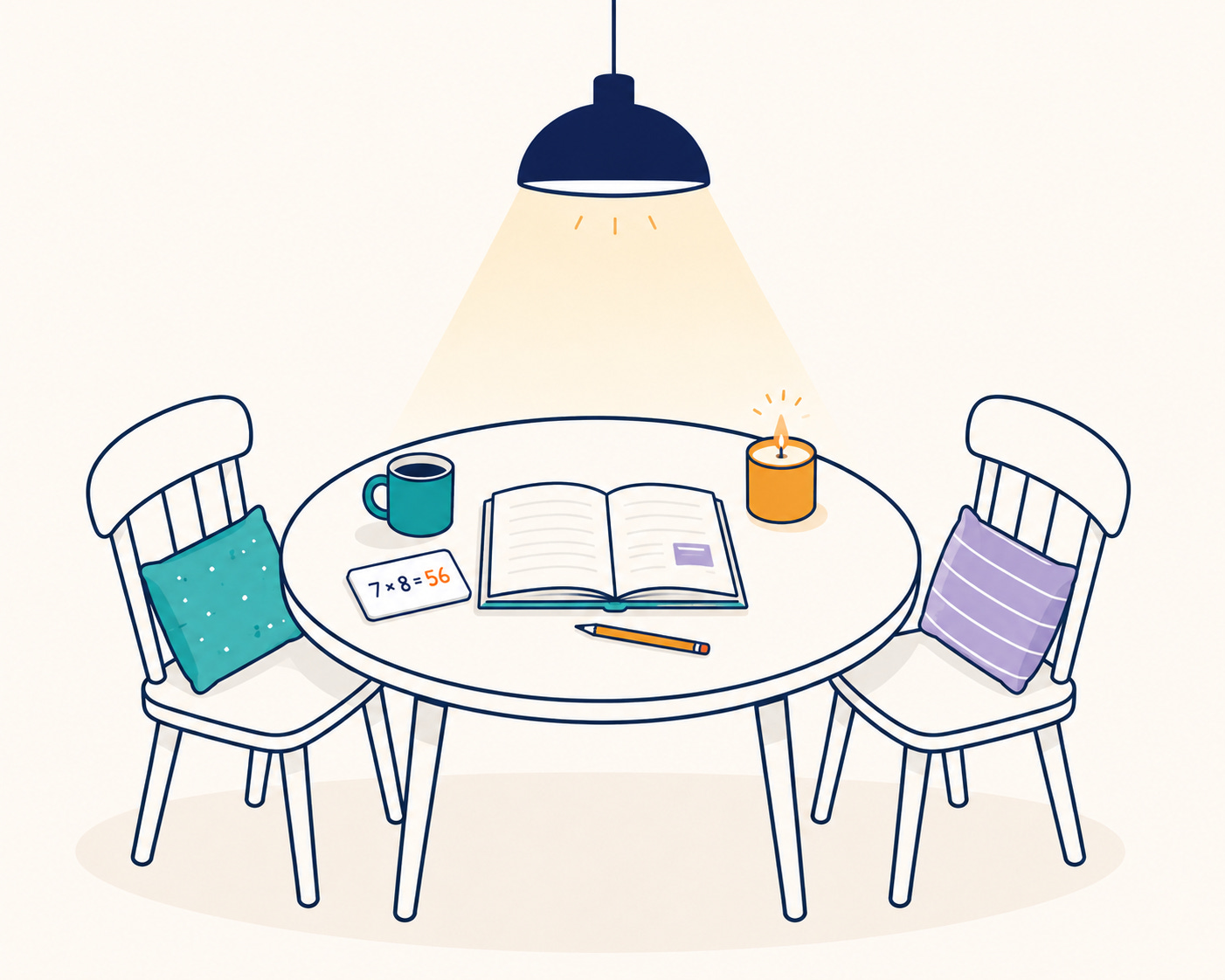

My auntie is Danish, and spending time in her home has always given me a particular sense of what hygge means. There are slippers waiting at the door, Christmas is celebrated by candlelight, people settle in rather than rush off, and an extraordinary amount of thought seems to go into making sure everyone is comfortable. Her home feels peaceful and welcoming, with a sense of warmth and togetherness woven into ordinary moments.
The Danish word hygge is difficult to translate neatly into English, although it is usually associated with cosiness, comfort, warmth and spending enjoyable time with other people. We often think about its visible trapping, candles, blankets, warm drinks and soft lighting, but these are really ways of creating the feeling. At its centre is something much more human: making an ordinary moment feel comfortable, connected and good to be in.
For a while, I have been wondering whether we can bring some of that same feeling to learning, particularly because learning itself will not always feel comfortable. When children are trying to understand something new, retrieve something they have begun to forget or become fluent in something that currently requires a lot of thought, they have to expend effort. Sometimes they will get things wrong, become frustrated or simply wish they were doing something else.
This is what I have started to think of as the hygge of learning: creating the conditions around learning that make effort feel manageable, worthwhile and shared.
Learning is allowed to be hard
One of the things we can easily forget as adults is just how much effort sits behind knowledge that now feels completely automatic to us. If you know your multiplication facts, reading 7 × 8 and knowing the answer is 56 barely feels like thinking at all, but for a child still learning those facts, retrieving the answer can require considerable concentration.
Some of the things that help children learn well also require effort, including recalling something from memory, returning to it after time has passed and applying familiar knowledge to an unfamiliar problem. With the right level of challenge and support, having to think is part of how knowledge becomes more secure.
Human beings, however, have a fairly understandable preference for things that feel easier, while learning something properly often involves spending time being unable to do something before becoming good at it. There is value in children discovering that finding something difficult is a normal part of learning and that difficulty can change with knowledge, practice and time.
Creating the hygge around learning
When I think about what the hygge of learning might look like at home, some of it is undoubtedly about creating an environment in which it feels pleasant to settle down together. It might mean sitting at the kitchen table with something to eat, curling up on the sofa to read, using a favourite notebook or having something warm to drink on a rainy afternoon.
None of this requires a beautifully styled home or an elaborate learning set-up, because the physical environment is only a small part of what creates the feeling. Far more important are time, attention and the sense that a child has somebody alongside them while they tackle something that may require effort.
Having a calm adult nearby can change the experience of finding something difficult. When an answer does not come immediately, there is no need to panic; a mistake can lead to another attempt, and frustration can be met with a prompt, a different explanation or the decision that enough has been done for today.
Over time, these small experiences can teach children something that extends far beyond whatever they happen to be practising. Finding something hard does not have to bring the experience to an end. Sometimes it is worth staying with the difficulty for a little longer and seeing what happens.
Learning together
Perhaps the part of the hygge of learning that matters most to me is the opportunity it creates for connection, because sitting alongside your child gives you a window into how they think that is difficult to get from a school report or test score.
Sitting alongside them, you begin to notice the things they know instantly and the things that make them hesitate. Their working can reveal the strange but sometimes ingenious routes they take to an answer, while conversation shows which words they understand, which ideas interest them and which misconceptions have somehow taken root. Best of all, there are moments when you get to see something suddenly make sense.
For children, there is reassurance in knowing that learning does not always have to be solitary. Somebody can sit beside them without supplying every answer, giving them enough time to think, offering a clue when they genuinely need one and noticing the progress that can otherwise be easy to miss.
Short, regular periods of learning at home can become small moments of shared attention in family life: a parent and child concentrating together on something worthwhile before putting it away and carrying on with the rest of the day.
What lies beyond the difficult bit
One of the reasons I want my own children to develop a reasonable tolerance for finding things difficult is that so much of the richness of learning becomes accessible only after we have built enough knowledge and fluency to reach it.
A child who becomes a fluent reader can lose themselves in books that would once have been exhausting to read. A rich vocabulary opens up more of what they encounter and gives them greater precision when expressing their own ideas. Secure mathematical knowledge makes it possible to spend less effort on basic calculations and more time thinking about the problem itself.
The same principle reaches far beyond primary school, because playing an instrument well, speaking another language, understanding science, writing beautifully, making things and becoming knowledgeable about almost anything all involve spending some time as a beginner.
There is also a particular pleasure in reaching the point where something that once demanded enormous concentration begins to feel natural. Children do not always notice this change happening, so drawing their attention to genuine progress can help them connect the effort they have made with the competence they now enjoy. Sometimes a simple observation, you had to think really hard about those a few weeks ago, is enough.
A different relationship with difficulty
Repeated experiences of manageable difficulty, within an environment where children feel supported, can help them become more comfortable with the feeling of not being able to do something yet. Frustration can pass, knowledge can grow, practice can change what they are capable of, and asking for help can sit alongside continuing to think for themselves.
There will, of course, be times when stopping is the right response, particularly when a child is exhausted, overwhelmed or simply does not yet have the knowledge they need. Persistence should never mean continuing until everyone is miserable, and part of learning together is recognising the difference between useful effort and a child who has reached their limit.
What I hope we can create instead is a gentle expectation that worthwhile things sometimes ask something of us. Concentrating for a little while, having another go or returning tomorrow can all become ordinary responses to finding something difficult. With enough time, knowledge and practice, children can gradually become capable of things that once felt beyond them.
Perhaps that is why the idea of hygge feels so appropriate to me. The candles and slippers are lovely, but the deeper appeal is the feeling they help create: a sense of comfort, time, togetherness and belonging.
Bringing some of that feeling to learning gives children a warm place from which to attempt difficult things, while allowing them to experience the satisfaction of making progress through their own effort. Over time, I hope they come to see that finding something hard is often simply part of learning something worth knowing - and that there can be real pleasure in discovering what becomes possible when they stick with it.