
☁️ Can You Sit on a Cloud?
A Findory Expedition

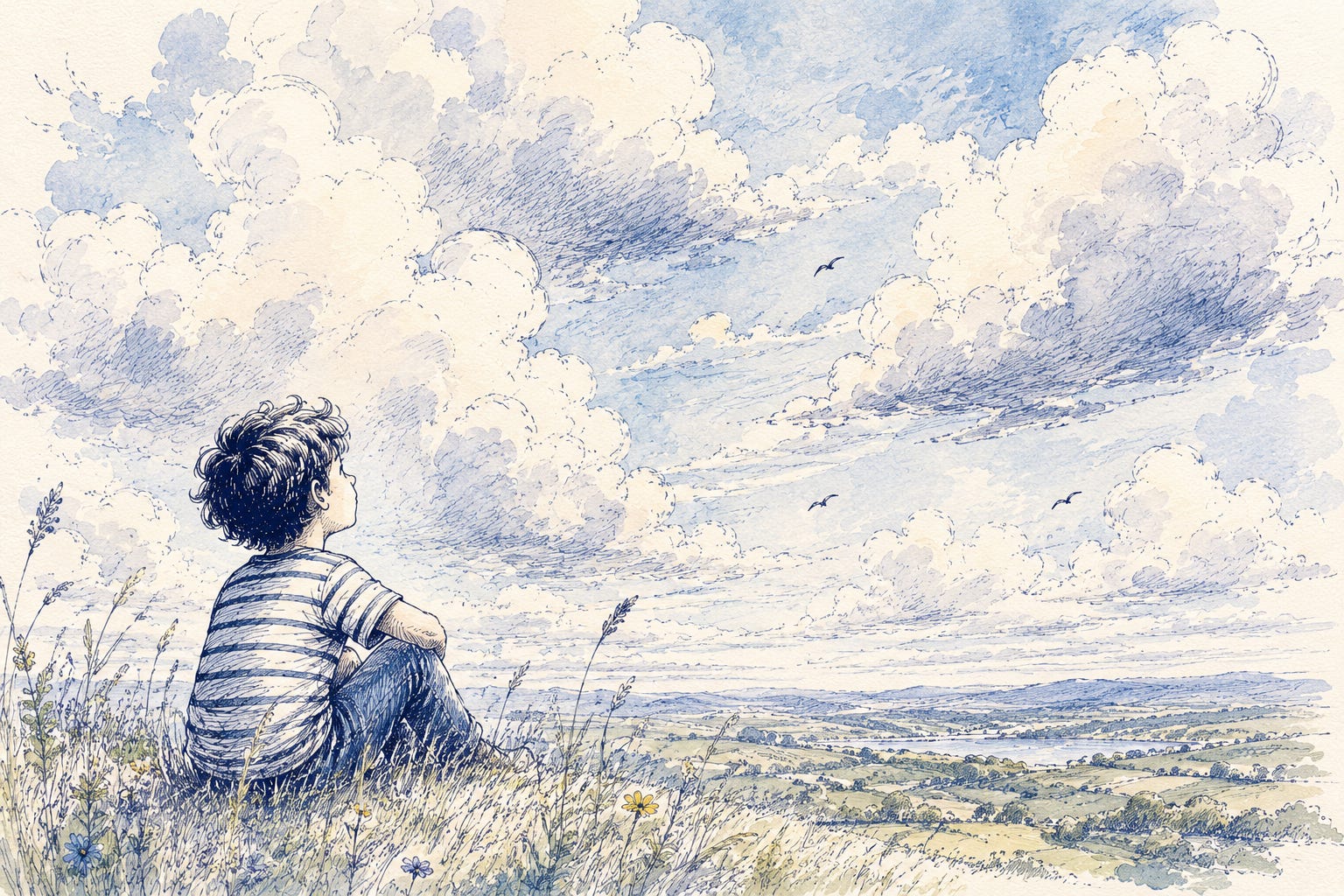
Take a moment to look up at the sky.
Can you see a cloud?
Perhaps it’s bright white against the blue. Perhaps it’s grey and heavy with rain. Maybe there aren’t any clouds where you are today. That’s alright too. Close your eyes and imagine the biggest, fluffiest cloud you can.
Clouds have fascinated people for thousands of years. They have inspired stories, paintings, poems and daydreams. They drift across the sky so quietly that it’s easy to forget they’re there, yet every one of them is part of an extraordinary journey.
Here’s something I’ve always wondered...
Could you sit on one?
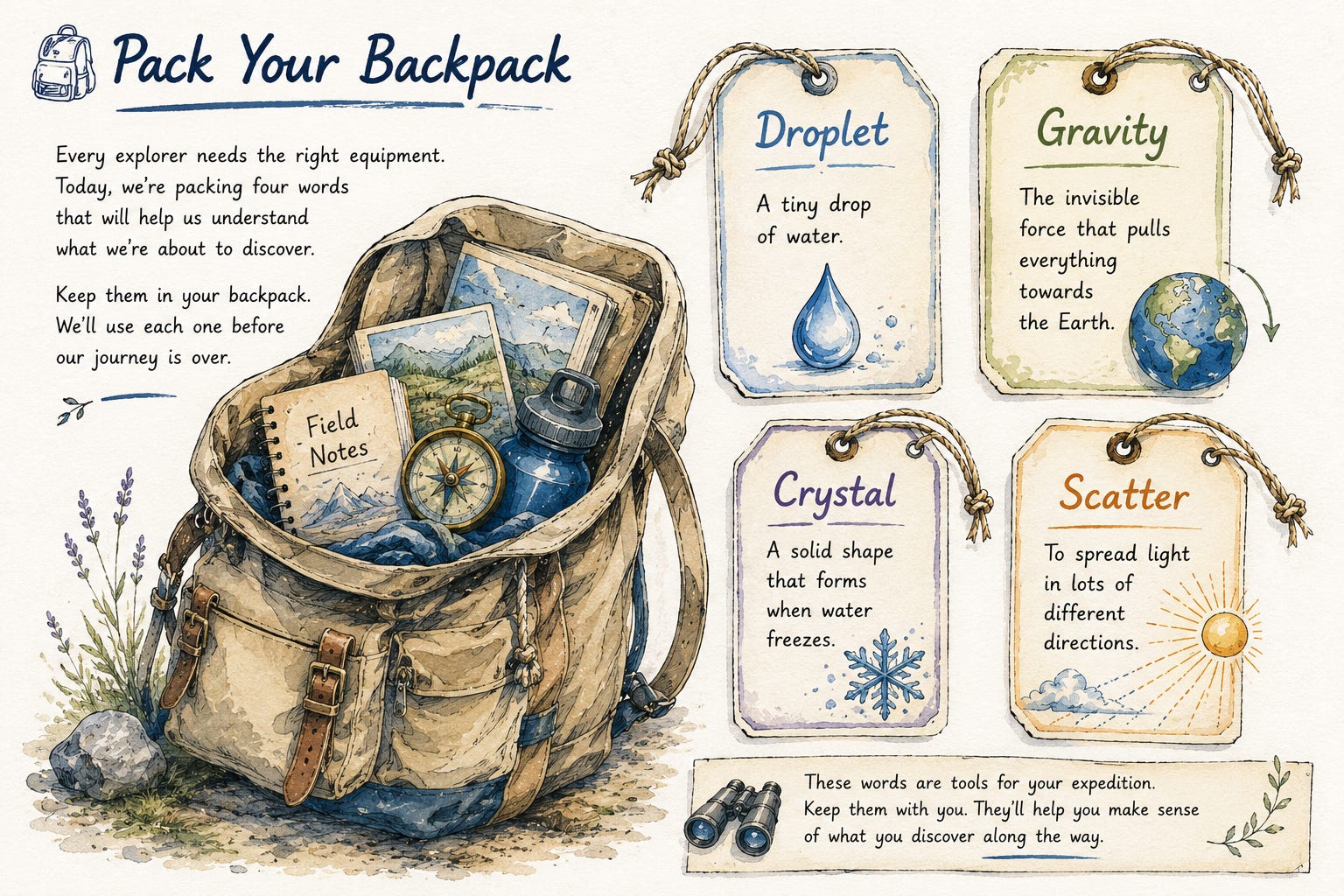
Before every expedition, explorers make sure they have everything they need.
Let’s pack your backpack.
Imagine...
Imagine you had the tallest ladder ever built.
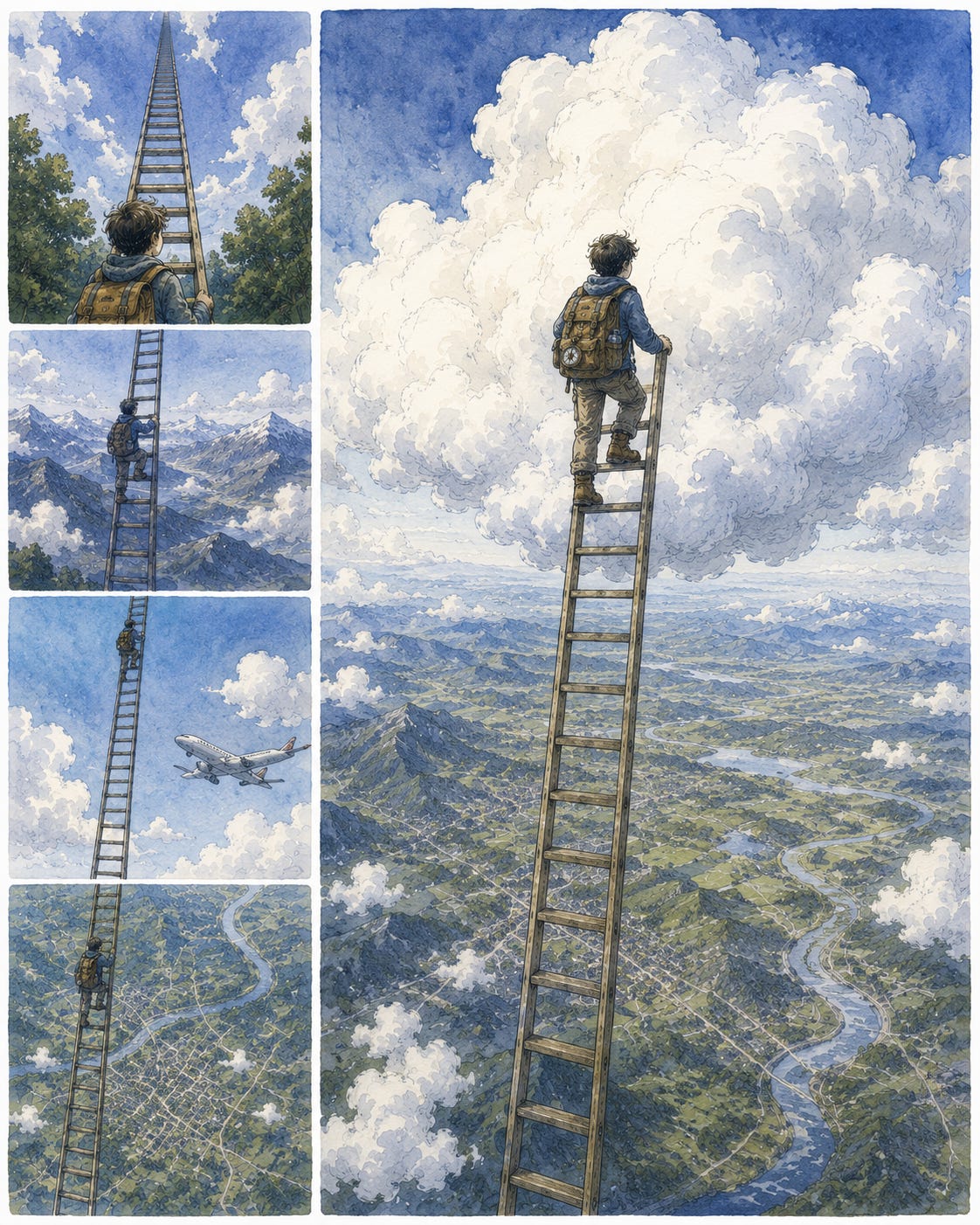
It stretches higher than trees, higher than mountains and even higher than aeroplanes. With every step, the world below grows smaller. Roads become tiny ribbons. Rivers sparkle like silver threads. The air feels cooler, quieter and wonderfully still.
At last, you reach a cloud.
It’s enormous.
From the ground it looked soft enough to curl up on, like a giant white pillow floating across the sky. You reach out your hand, expecting it to stop against something fluffy.
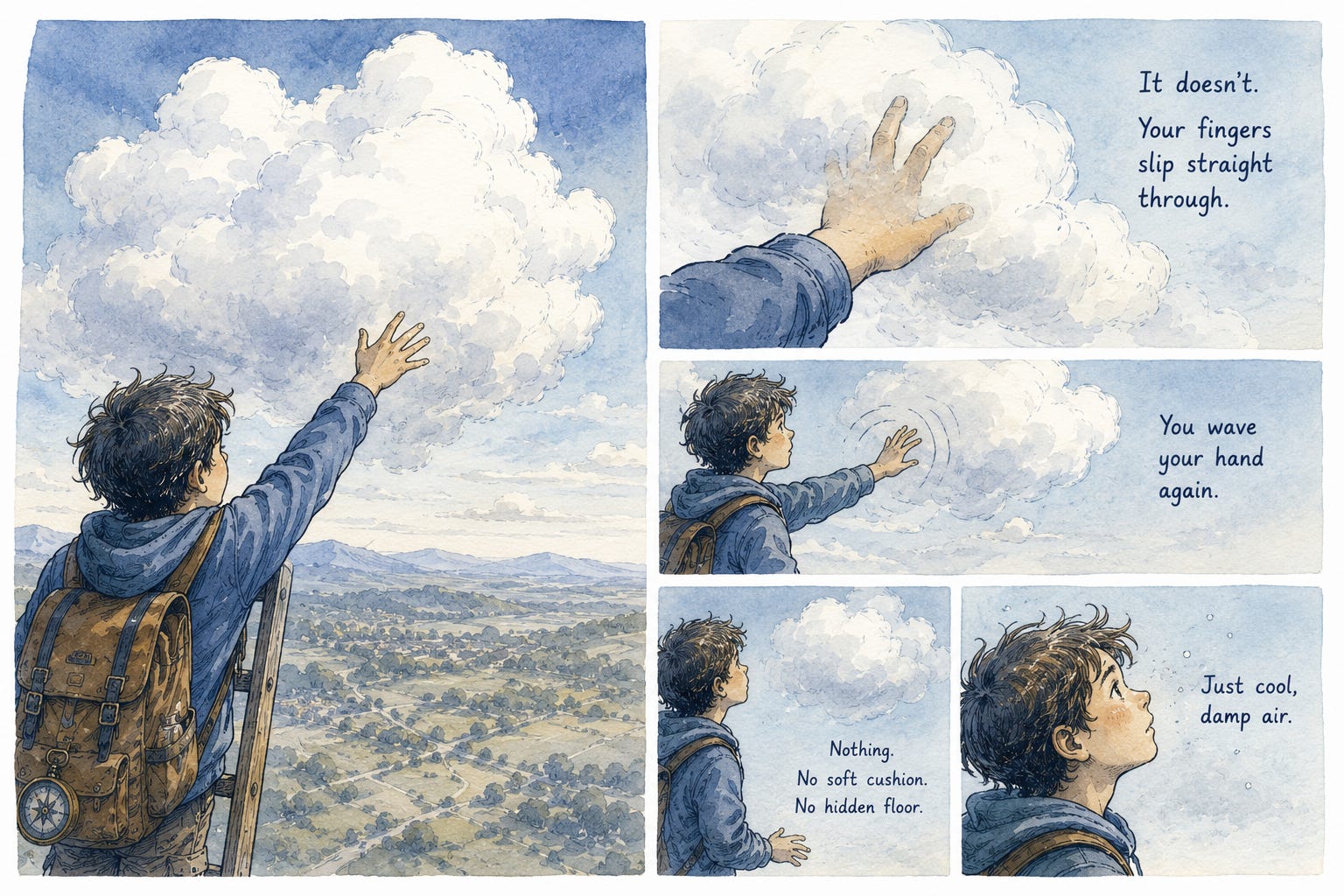
Clouds only look solid from far away.
Their secret is hidden inside millions and millions of tiny droplets of water. Each droplet is far too small for us to see on its own. Some clouds are so cold that many of those droplets freeze into tiny ice crystals instead.
Together, these tiny droplets and crystals catch the sunlight and scatter it in every direction. That’s why clouds look bright white from the ground, even though they’re mostly made of water and air.
So if you tried to sit on one... you would simply drift straight through.
You might feel a cool mist on your face, but there would be nothing there to hold you up.
Perhaps you are wondering something else now.
If clouds are made of water, why don’t they fall?
The answer begins with gravity.
Gravity is always pulling everything towards the Earth, including every tiny droplet inside a cloud. But each droplet is so incredibly small that gentle currents of rising air can keep it floating for a surprisingly long time.
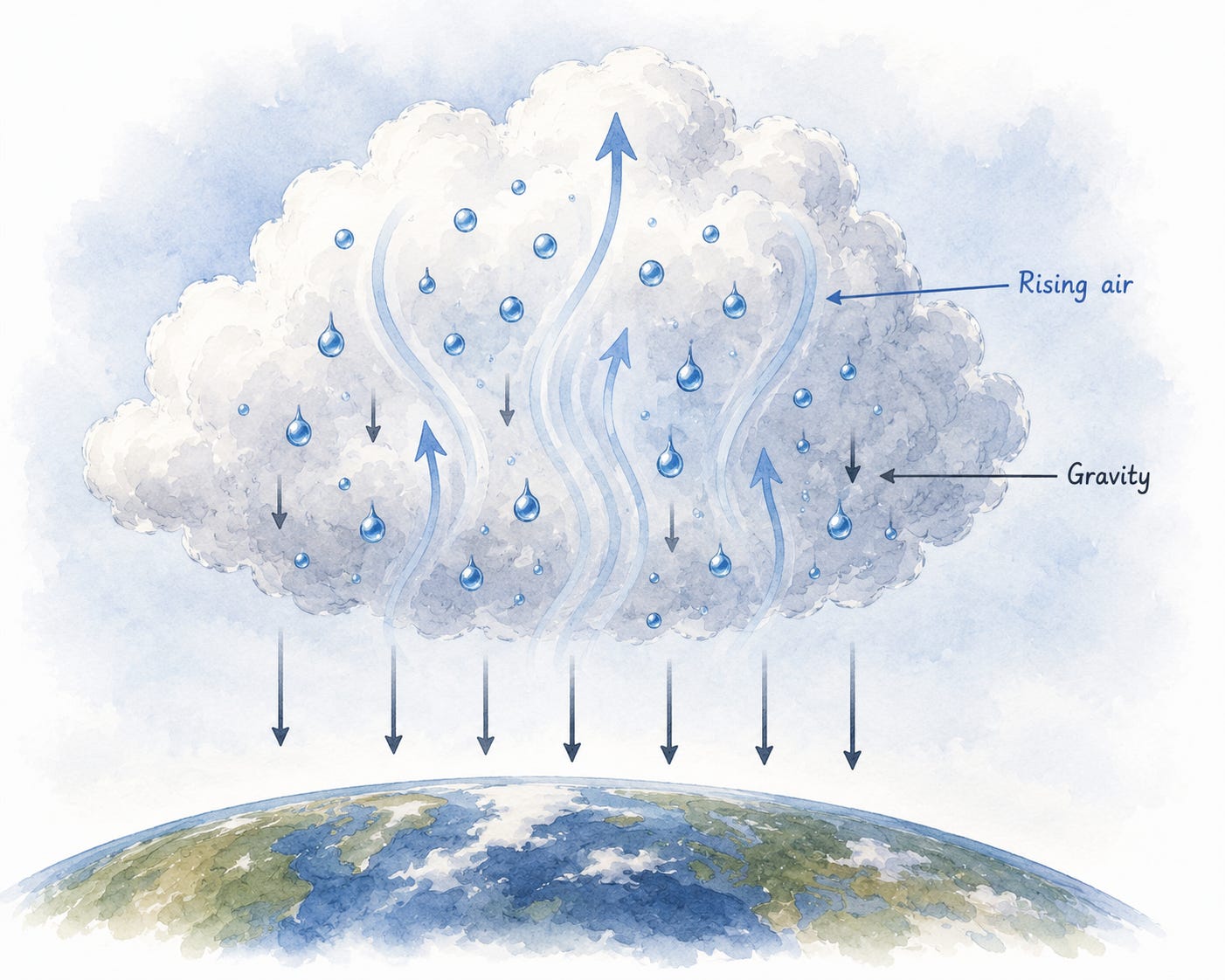
Imagine trying to catch a feather on a windy day. The feather wants to fall, but the moving air keeps lifting it back up again. The droplets inside a cloud behave in much the same way.
Clouds never stay exactly the same.
As they drift across the sky, tiny droplets bump into one another. Some join together to make bigger droplets. Then those join with others, becoming heavier and heavier.
Eventually, the droplets become too heavy for the rising air to hold.
Gravity finally wins.
The droplets begin their long journey back to Earth.
We have another name for that journey.
Rain.
The next time you stand beneath a shower of rain, pause for a moment and look up.
Every raindrop that lands on your umbrella, your garden or the end of your nose began its journey floating quietly inside a cloud.

Our expedition is nearly over.
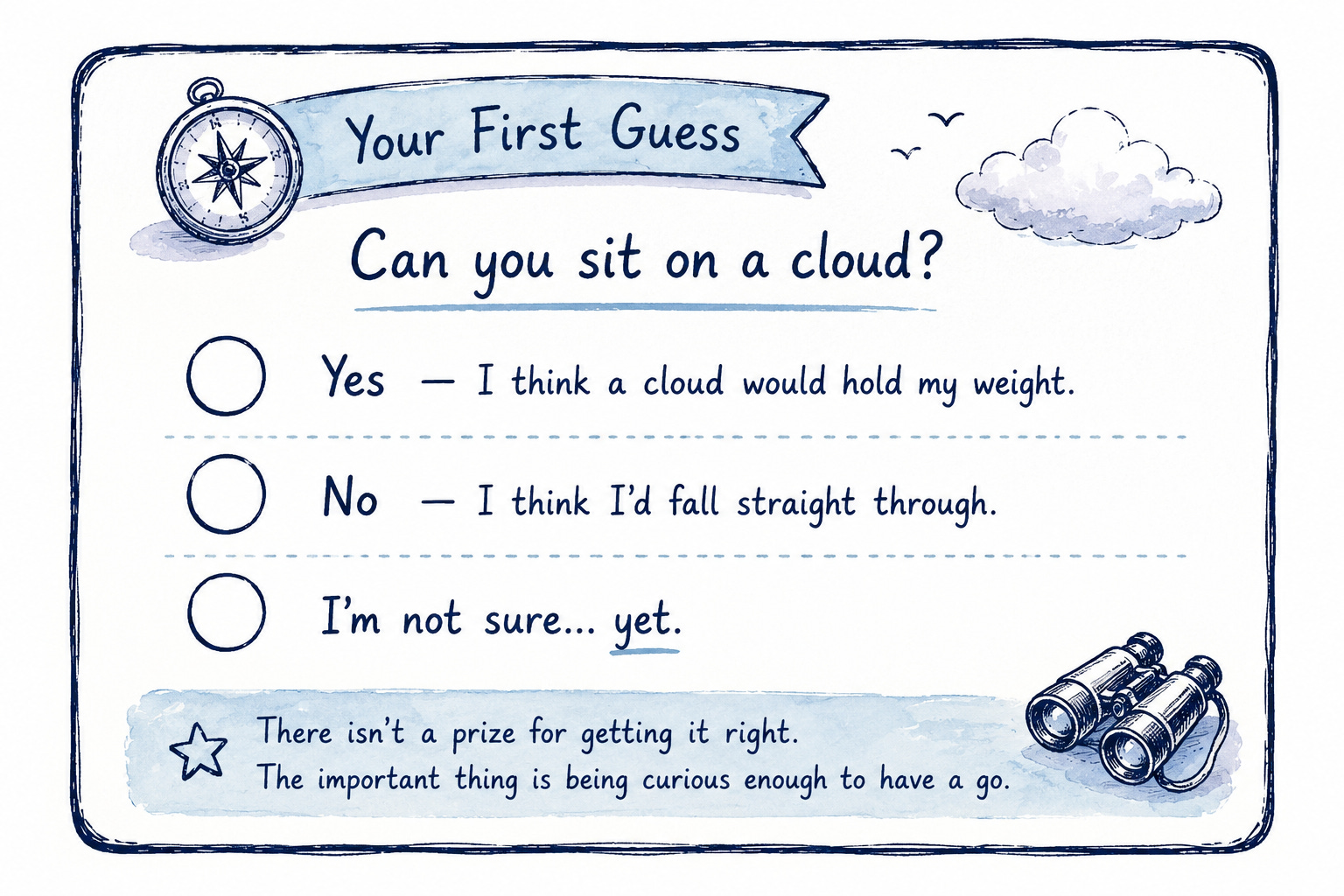
When we first looked up at the sky, I asked you a question.
Could you sit on a cloud?
Perhaps you thought yes. Perhaps you thought no. Or perhaps you weren’t quite sure.
Now that we’ve explored together, would you change your mind?
Before you set off on your next expedition, I’d love you to think about three things.
What surprised you most?
What did you discover that you didn’t know before?
What are you wondering now?
Every great discovery begins with curiosity.
The very best ones leave us with another question to explore.
🧭 Where shall we explore next?
Leave your biggest question in the comments. It might become our next Findory Expedition.